Bikaji Foods International Ltd’s portfolio spans across a wide range of offerings, including bhujia, namkeen, packaged sweets, papad, western snacks, and frozen products, addressing diverse consumption occasions and evolving consumer preferences. Bikaji Foods International Ltd has established itself as one of the leading players specializing in ethnic snacks and traditional sweets. It has rapidly scaled within the organised snacks industry and is supported by strong brand equity and an expanding presence in global markets. Among the better known names within the ethnic snacks category along with Haldiram and Gopal Snacks, Bikaji Foods offers the prospect of another business within the expanding set of opportunities within the consumer discretionary theme in India.
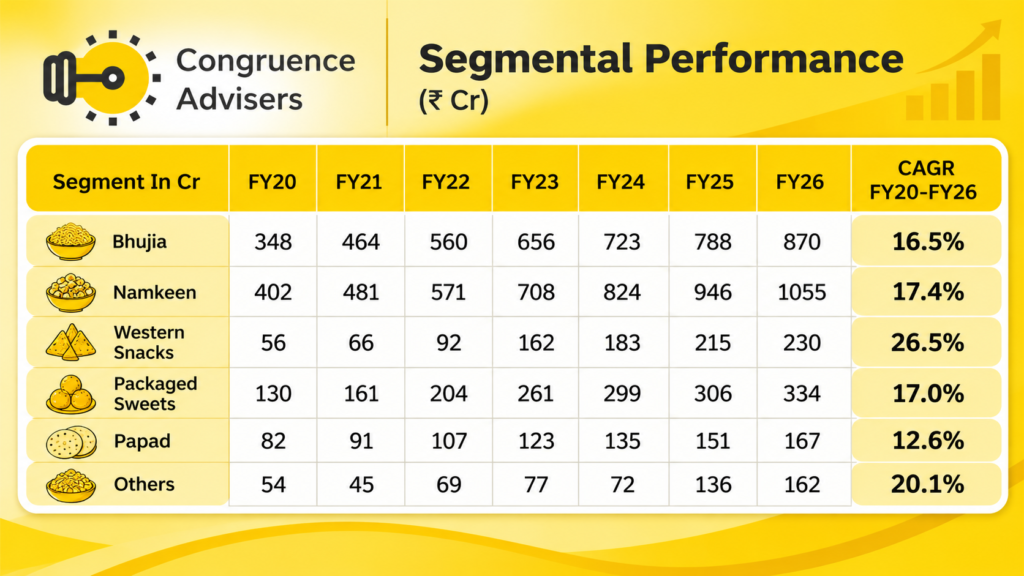
Bikaji Foods International Ltd presents the prospect of a consumer discretionary business that has grown volumes at double digits over the past 5 years, something of a rarity in a very muted consumption environment in India. Each one of its business segments has grown revenue in excess of 15% p.a. over the past 5 years, while having a large enough room for growth in the form of low capacity utilization (< 50%) as of FY26. In this note we evaluate if the business model is resilient enough to sustain these high historical growth rates into the next 5 years.
While the consumer sector has delivered very muted returns over the past 3-5 years, the trend may be ripe for a change if consumption picks up and builds upon the initial momentum seen through FY26. Indian snacking habits might be changing in urban India, but are still the same in the other parts of the country.
Can Bikaji Foods offer the opportunity of participating in these segments of India where inertial loyalty is high, and change of habits hard to come by? Especially in a phase where incremental capex needs are minimal and operating leverage has the potential to move the needle on PAT growth disproportionately?
Bikaji Foods International Ltd – Company Summary
Bikaji Foods International Ltd’s flagship Bikaneri Bhujia, a product with a recognized Geographical Indication (GI) tag, remains central to the Bikaji Foods International Ltd’s brand identity, while its presence in sweets and papad further strengthens its category leadership.
Bikaji Foods International Ltd has established a strong foothold in northern and eastern India and is progressively expanding into other regions to strengthen its pan-India presence. Bikaji Foods International Ltd focuses on maintaining consistent quality, authentic taste, and efficient packaging solutions to enhance product appeal and shelf life.
It continues to strengthen its brand through targeted marketing initiatives and wider reach across modern trade, e-commerce, and institutional channels. Alongside its domestic growth, Bikaji Foods International Ltd is also expanding its international footprint by exporting to key global markets to tap into rising demand for Indian packaged foods.
Bikaji Foods International Ltd Management Details
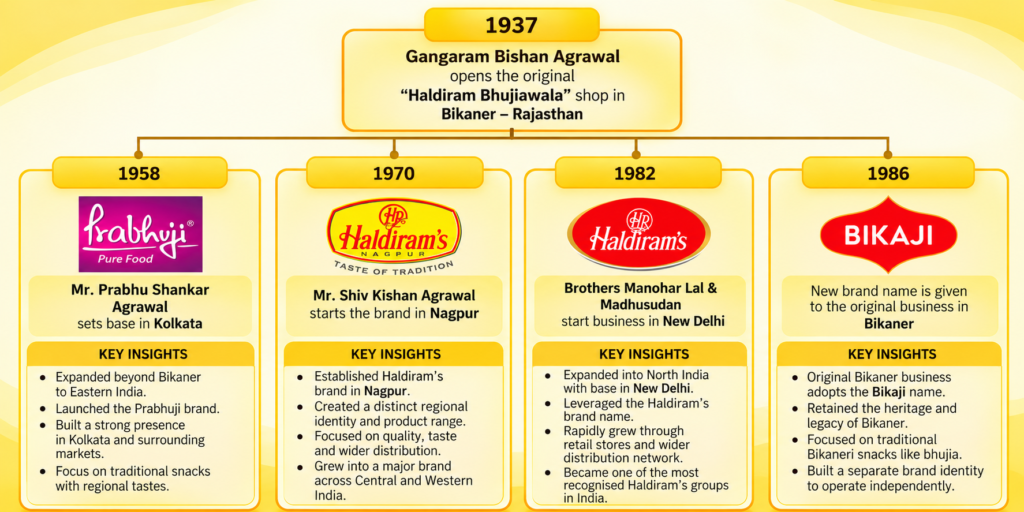
To understand the origins of Bikaji Foods, it will be worthwhile to spend a short time understanding the origins of the Haldiram’s brand. Haldiram’s is one of India’s best-known snack and sweets brands, famous for bhujia, namkeen, Indian sweets, ready-to-eat foods, and restaurant-style snacks. Its story began with a small family business in Bikaner, Rajasthan, and grew into a major Indian food business through generations of entrepreneurship.
In 1930, the business was associated with Ganga Bhishen Agarwal, popularly known as Haldiram Ji. He developed and sold a distinctive version of Bikaneri bhujia, helping turn a local savoury snack into the foundation of a growing business. The brand built its reputation on taste, crispness, consistent quality, and a recognisable recipe. Bhujia became its signature product and helped establish the family name.
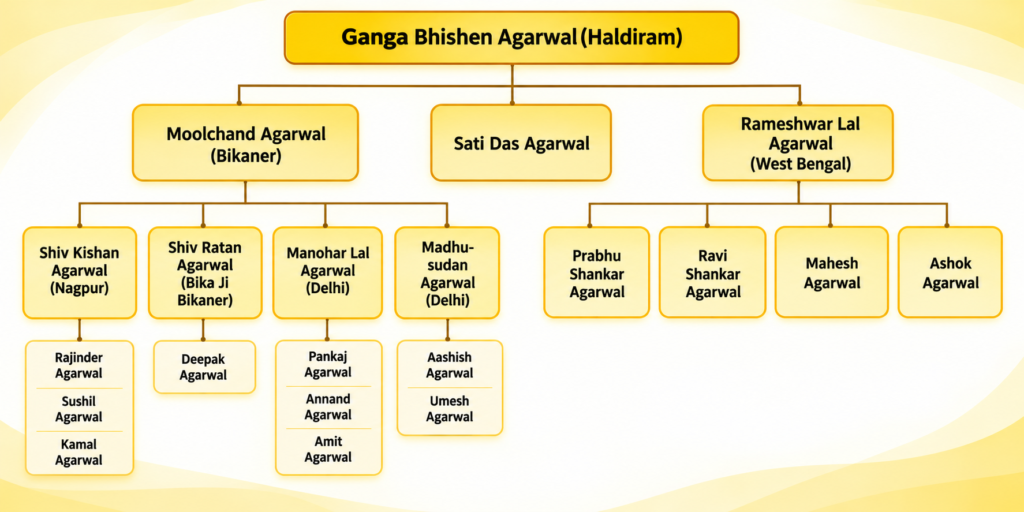
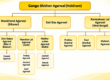
Later generations expanded the business into new Indian markets, including Kolkata, Nagpur, and Delhi. Different branches of the family developed separate businesses under the Haldiram name. Bikaji Foods in its current form is an offshoot of the Bikaner branch of the overall Haldiram’s umbrella. Today it has carved out a national identity of its own, without being overshadowed by its more illustrious peer in the Haldiram’s group.
Bikaji Foods International Ltd – Industry Overview
Packaged Foods market in India
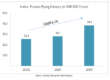
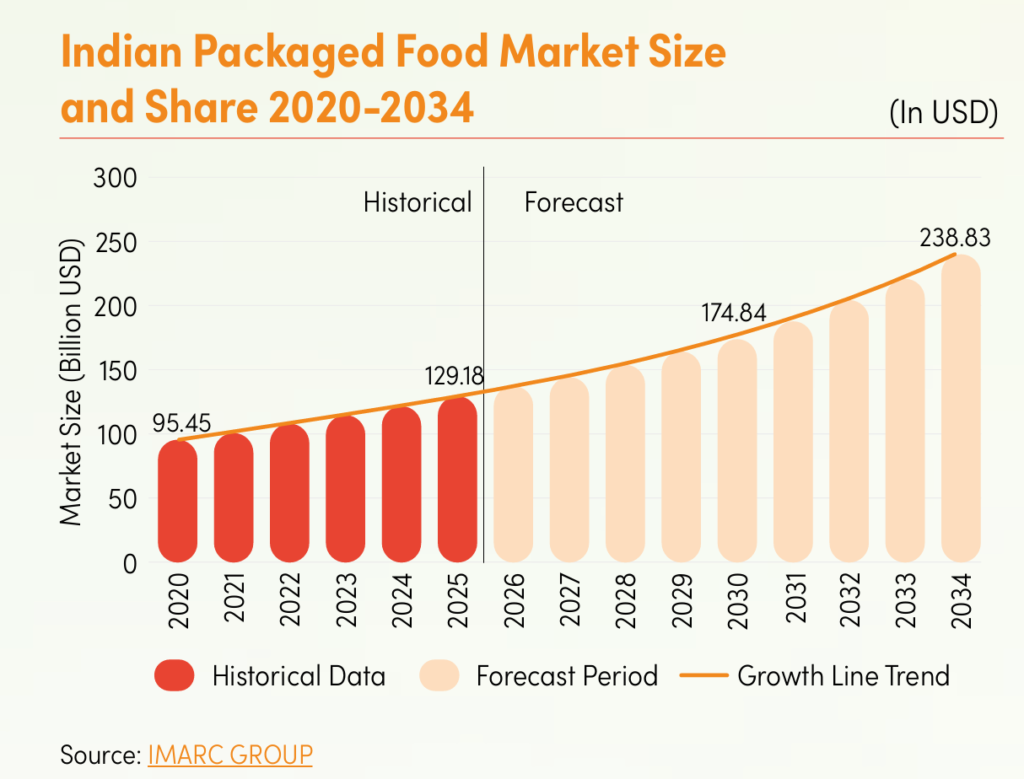
The current market size of packaged foods in India is USD 129.2 billion, exhibiting a CAGR of 6.24% during 2026-2034. The packaged food industry in India has continued its steady growth trajectory into FY26, supported by structural shifts in consumption. Growth in FY26 is driven by increasing urbanisation, rising disposable incomes and changing lifestyles, leading to higher demand for convenient food options such as ready-to-eat and ready-to-cook products. Their popularity is driven by ease of consumption and the availability of clear product information, including nutritional values, ingredients, and expiry dates.
The Indian packaged food industry is highly fragmented and multilayered, which consists of organised and unorganised players operating across various product lines. The organised players consist of large FMCG companies and established regional brands whereas the unorganised sector comprises loose/unbranded food manufacturers. The industry is witnessing a gradual shift from unorganised to organised players.
The distribution ecosystem has also strengthened significantly in FY26, with widespread presence across traditional retail, modern trade and digital platforms. While offline channels remain dominant, online channels are witnessing rapid adoption due to improved accessibility and convenience. Regulatory oversight by the Food Safety and Standards Authority of India (FSSAI) has further enhanced food safety standards and strengthened consumer confidence.
Outlining the Distribution Reach – The Indian packaged food industry is supported by a comprehensive and evolving distribution network, including both offline and online channels. A robust distribution network forms the backbone of the packaged food industry.
India’s Dominance in Snacking
The Indian Snacking market is valued at ₹50,590 Cr in FY25. This growth is driven by increasing disposable incomes, changing lifestyle trends, and rapid urbanisation. Western dietary habits and rising health awareness among the youthful demography are increasing the demand for unique flavours and creative snacking products. The Indian snacks industry consists of a broad range of products, including biscuits, fryums, popcorn, chips, traditional namkeen, salted peanuts, and ready-to-eat items.
While the snacks market was historically dominated by local vendors and unorganised players, organised brands are gaining significant market share due to increasing consumer preference for hygiene, quality, and branded products. Going by the product type, chips dominate the market with a share of 42% in FY25 because of their universal appeal across various age groups. Pouch is the leader in pack type segmentation with a market share of 68% in FY25 due to its convenience for portability and consumption anywhere. By Pack Size: 50-100 gm represents the largest segment with a market share of 45% in 2025.
Outlook
The Indian Snacking market is expected to have steady growth in FY27, which will be mostly supported by increasing urbanisation, rising disposable income, and evolving consumption patterns. The market generated is projected to reach a revenue of H 1,03,556.03 Crore by 2034, growing at a CAGR of 8.28% from 2026-2034. Also, consumer demand is expected to pivot towards healthy snacking due to increased health and nutrition awareness among consumers.

Segment-wise Organised Indian Snack and Sweet Market
Ethnic Namkeen and Snacks, Ethnic Bhujia and Western Snacks
The Indian namkeen market is poised for robust growth, driven by changing consumer lifestyles, rising preference for convenient snacking options, and increasing demand for branded packaged foods. The market is expected to expand by USD 4,887.6 million during 2026-2030, registering a CAGR of 10.2%. Growth is being supported by expanding retail penetration, increasing disposable incomes, and the growing popularity of regional and ethnic snack varieties across diverse consumer segments.
Sweets Market
The Indian packaged sweets industry is an integral part of the broader traditional foods segment, driven by strong cultural relevance and high consumption during festivals, celebrations, and gifting occasions. The Indian packaged sweets market was valued at H 8,431 Crore in 2025 and is projected to reach H 30,505.74 Crore by 2034, growing at a CAGR of 15.36% from 2026–2034. The industry is witnessing a gradual shift from unorganised mithai shops to branded and packaged offerings, supported by increasing consumer preference for hygiene, quality, convenience, and longer shelf life.
Papad Market
The Indian papad industry is a traditional yet evolving segment within the packaged foods market which is driven by strong household presence and cultural value. The Indian papad market is a mix of organised players and a large unorganised base, with an increasing shift toward branded and packaged products due to rising hygiene awareness and demand for consistent quality.
Major Split of the Industry by Region
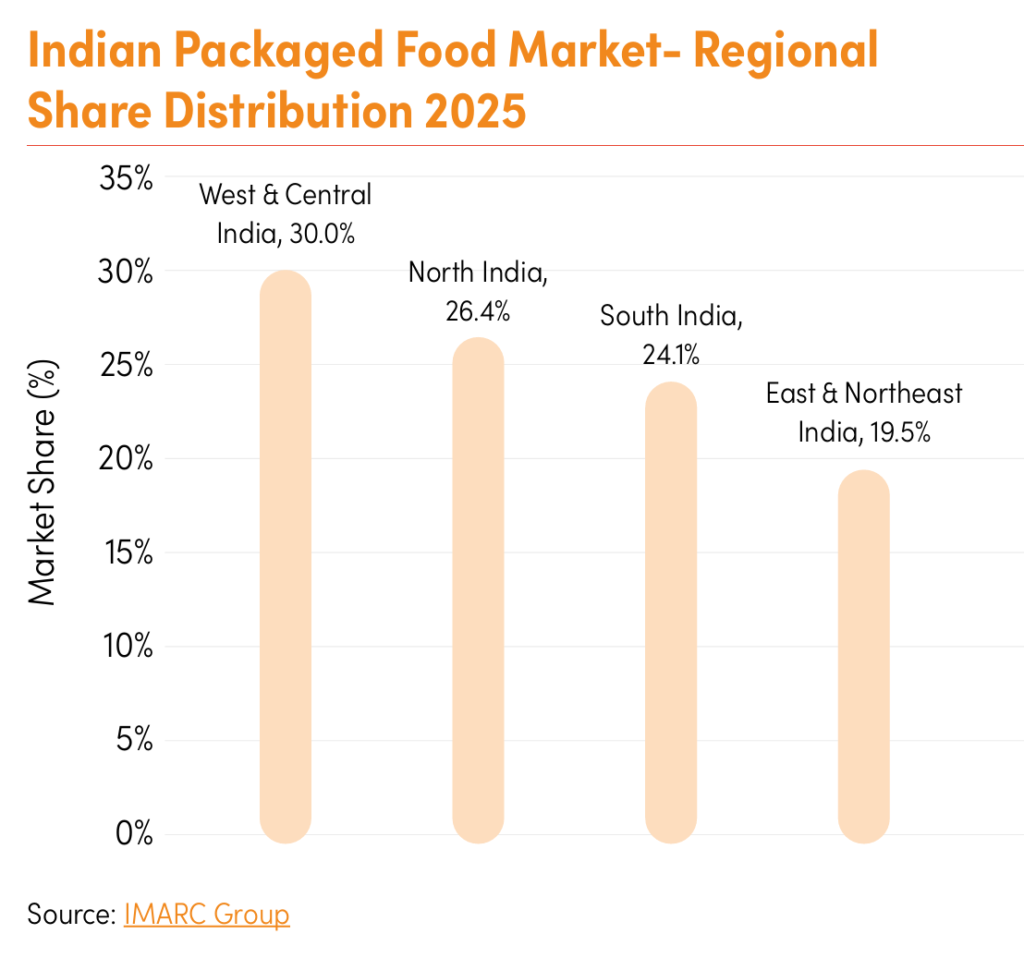
West and Central India represent a significant share of the packaged food market, supported by higher urbanisation levels, strong purchasing power, well-developed retail infrastructure, and the presence of major food processing hubs. States such as Maharashtra and Gujarat continue to drive consumption through widespread adoption of branded and convenience-oriented food products. The region benefits from extensive supermarket penetration, efficient logistics networks, and increasing demand for packaged snacks, sweets, and ready-to-eat offerings across both metropolitan and emerging urban centres.
South India has emerged as one of the fastest-growing regional markets, driven by rising disposable incomes, rapid urban expansion, and evolving consumer lifestyles.
Bikaji Foods International Ltd Business Overview
Bikaji Foods International Ltd has established itself as one of the leading players specializing in ethnic snacks and traditional sweets. It has rapidly scaled within the organised snacks industry and is supported by strong brand equity and an expanding presence in global markets. The Company’s portfolio spans across a wide range of offerings, including bhujia, namkeen, packaged sweets, papad, western snacks, and frozen products, addressing diverse consumption occasions and evolving consumer preferences.
Its flagship Bikaneri Bhujia, a product with a recognized Geographical Indication (GI) tag, remains central to the Company’s brand identity, while its presence in sweets and papad further strengthens its category leadership. Bikaji Foods International Ltd has established a strong foothold in northern and eastern India and is progressively expanding into other regions to strengthen its pan-India presence. The Company focuses on maintaining consistent quality, authentic taste, and efficient packaging solutions to enhance product appeal and shelf life. It continues to strengthen its brand through targeted marketing initiatives and wider reach across modern trade, e-commerce, and institutional channels. Alongside its domestic growth, Bikaji Foods International Ltd is also expanding its international footprint by exporting to key global markets to tap into rising demand for Indian packaged foods.
CATEGORY-LED BUSINESS STRUCTURE
Bikaji Foods International Ltd portfolio is structured across distinct product categories, each addressing specific consumption occasions, evolving consumer preferences, and defined market opportunities.
While ethnic snacks continue to anchor the business, adjacent categories such as western snacks, frozen foods, and packaged sweets are progressively broadening consumption footprint and strengthening presence across diverse food segments.
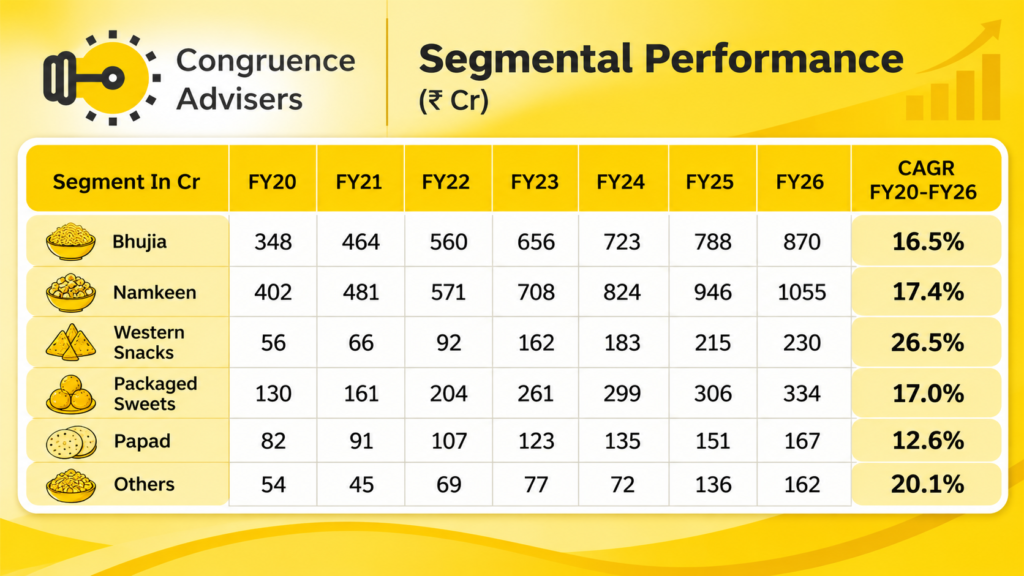
Ethnic snacks continued to serve as the cornerstone, contributing 69% of the portfolio’s revenue in FY26, led by strong demand for Bikaneri Bhujia, namkeen, and other regional variants. The category benefited from deeper rural expansion, higher retail availability and sustained preference for trusted organised brands. In addition, affordable price points and strong regional recall facilitated volume growth across core markets.
Bhujia segment is the cornerstone and flagship category of Bikaji Foods International Ltd, serving as the company’s primary “hero product” and historical foundation. The authentic Bikaneri Bhujia produced in Bikaner was granted the Geographical Indication (GI) tag in 2010, establishing a unique identity based on recipe, taste, and heritage. Bhujia alone generates approximately 33% to 35% of Bikaji Foods International Ltd total revenue.
The Bhujia category carries superior gross margin characteristics. Strong volume momentum in Bikaneri Bhujia directly supports overall gross margin expansion and company-wide profitability.
Central production hubs in Bikaner provide direct access to key local raw materials, such as dew bean (moth dal), moong dal, and spices. To optimize logistics costs and serve high demand across regions, production has expanded outside Bikaner to regional facilities including Guwahati and Patna.
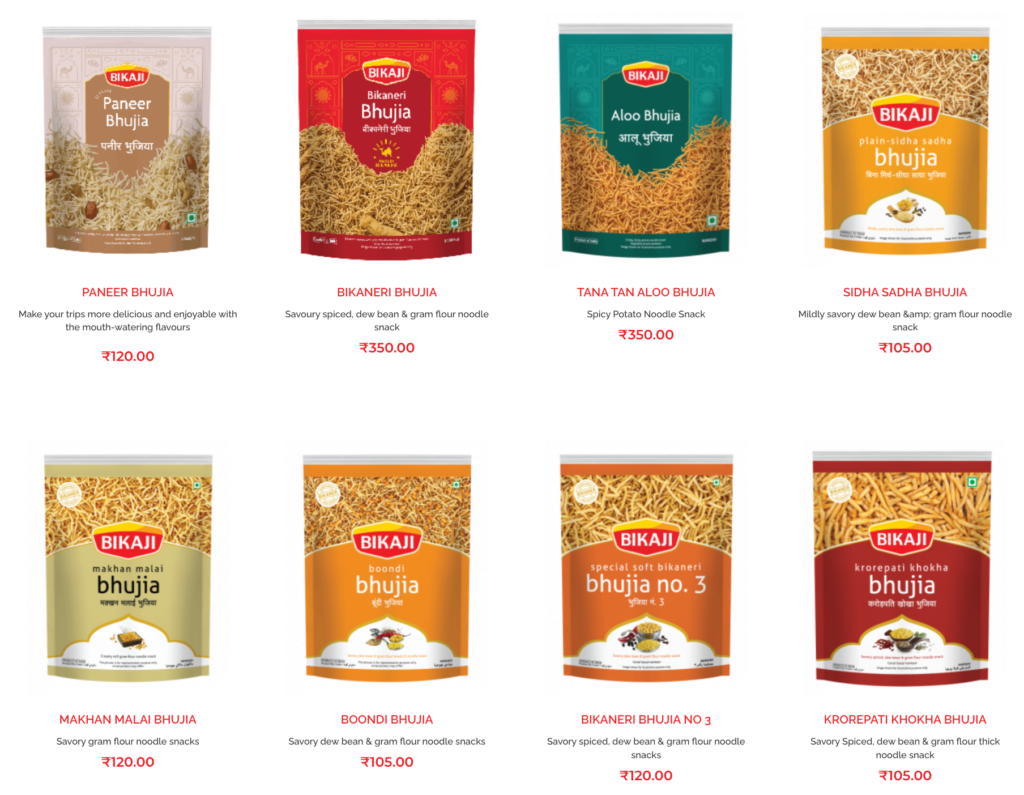
Bhuja Product Offerings
Source: Company
The Namkeen segment is Bikaji Foods’ largest product category by volume and capacity, and together with Bhujia, forms the core of the company’s Ethnic Snacks portfolio. While Bhujia represents Bikaji Foods International Ltd heritage “hero” product, the Namkeen range provides the wide regional variety and scale necessary to capture market share across India.
Namkeen is Bikaji Foods International Ltd single largest category by sales mix, accounting for approximately 35% to 37% of total revenue. While central production remains in Bikaner, Bikaji Foods International Ltd manufactures Namkeen across strategic regional hubs including Guwahati (Assam), Patna & Muzaffarpur (Bihar), Kanpur (UP), Kolkata (West Bengal), and Tumkur (Karnataka), as well as dedicated Contract Manufacturing Units (CMUs) to minimize freight costs and service local taste profiles quickly Bikaji Foods International Ltd produces over 60 to 66 distinct Namkeen varieties, representing the most diverse category in its domestic and international catalogue.
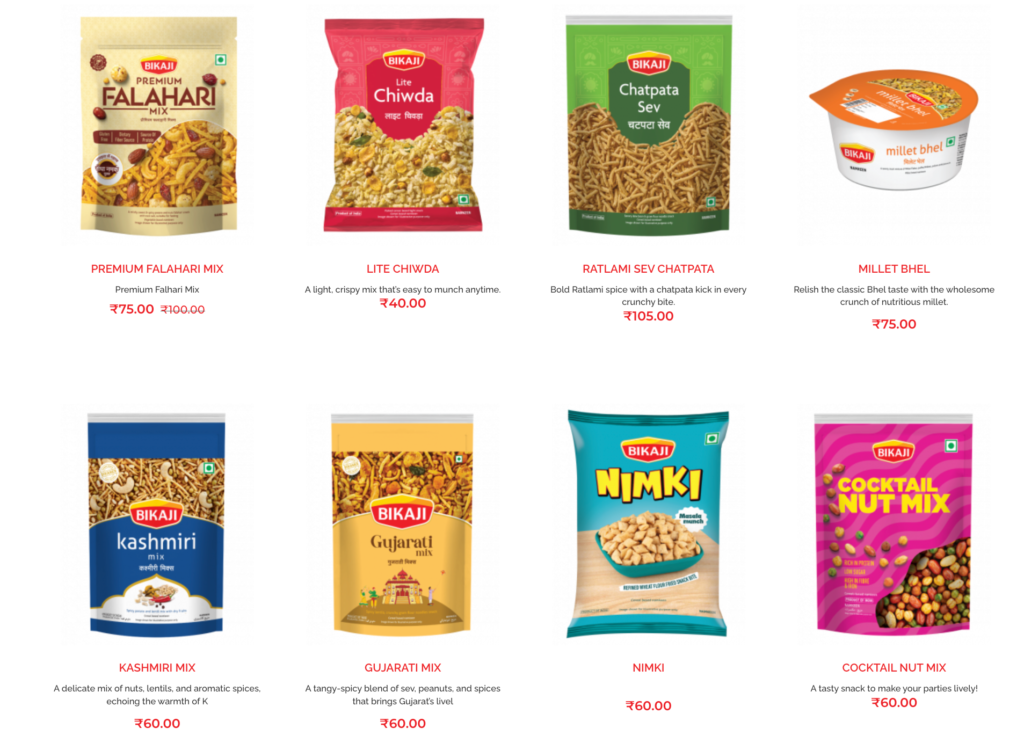
Namkeen Product Offerings
The Western Snacks segment is one of Bikaji Foods International Ltd key diversification and expansion categories. Western Snacks was established to cater to evolving modern consumer preferences, tap younger demographics, and expand retail distribution reach across India. The category contributes approximately 8% to 8.5% of total company revenue.
Product Basket & Sub-Brands
Bikaji Foods International Ltd western snacks classification primarily comprises chips, extruded products, and pellets:
Sub-Brands:
- Bikaji Funkeen: Focuses on fun, modern extruded and shaped savoury formats, including Cheese Balls, Corn Puffs, Fingers, Pasta Snacks, French Fries, Soya Katori, Cones, Twisteez, and Wheels / Pipes / Noodles.
- Bikaji Café: Focuses on contemporary snack items such as Multigrain Chips, Nachos, Popcorn, and filled snacks (Fillows).
Product Formats:
- Potato & Speciality Chips: Potato chips (including Street Style Chips like Samosa flavour) and roasted wheat crisps (Slim Bites).
- Extruded & Pellets: Low-density, puffed, and fried extruded shapes popular among children and young adults.
Price Points & Pack Architecture
- Unlike Ethnic Snacks (which are heavily anchored by family packs above ₹10), Western Snacks is predominantly an impulse purchase category, driven primarily by ₹5 and ₹10 price points.
- To protect margins and increase basket size, Bikaji Foods International Ltd has also introduced larger packs priced at ₹20, ₹30, and ₹50, particularly targeted at modern trade formats and quick-commerce channels (such as Blinkit, Zepto, and Instamart)
Western Snacks dean historically carried tighter gross margins bdva ethnic snacks (which enjoy gross margins around 26%–28%+) due to aggressive ₹5 price points and logistics overheads. Bikaji Foods International Ltd avoids deep discounting and destructive price wars initiated by unorganised and regional competitors.
Western Snacks Product offerings

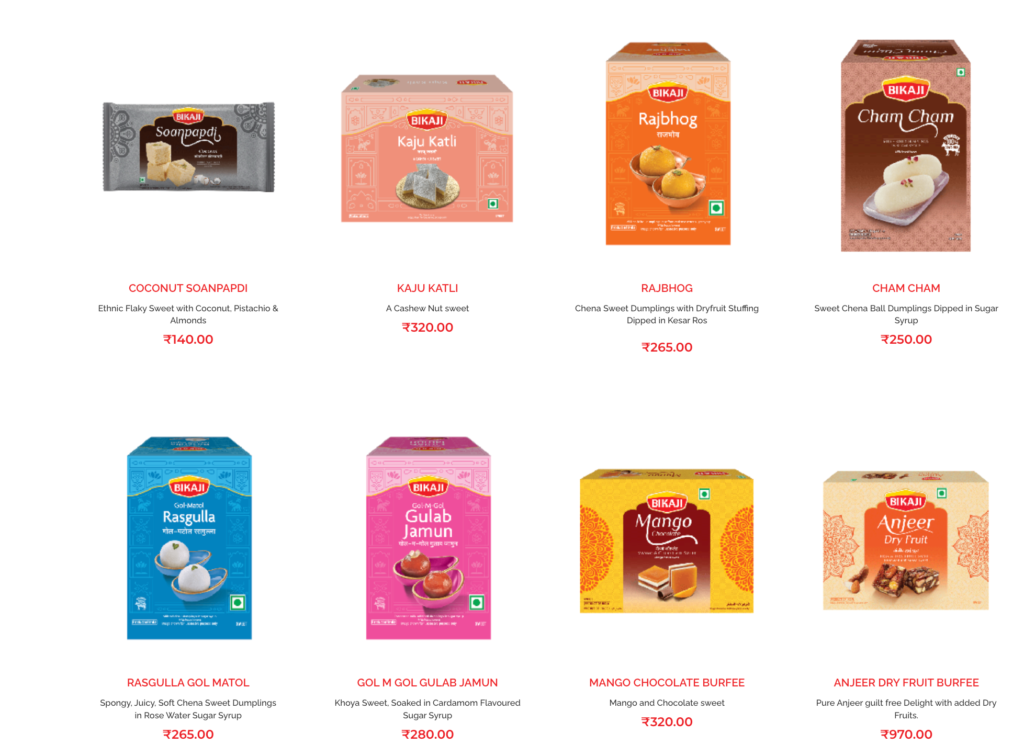
The Packaged Sweets segment is Bikaji Foods International Ltd third-largest product category, serving as a critical pillar for brand premiumisation, festive gifting, and margin expansion.Bikaji Foods International Ltd is recognized as one of India’s leading manufacturers of packaged traditional sweets, enjoying strong household trust as the category shifts from unorganized sweet shops toward hygienic, branded packaged formats
Bikaji Foods International Ltd is one of the largest manufacturers of packaged sweets in India, holding a standout position particularly in packaged Rasgulla, Gulab Jamun, and Soan Papdi. While the broader Indian traditional sweets market has historically been heavily unorganised, consumer preference is shifting toward branded boxed sweets due to assured hygiene, longer shelf life, transparent ingredient labelling, and FSSAI safety compliance.
Packaged Sweets contributes approximately 12% to 15% of Bikaji Foods International Ltd total annual revenue. Because of heavy festival gifting, its quarterly share fluctuates significantly ranging from 6% to 7% in non-peak quarters (such as Q4 and Q1) up to 15% to 17.5%+ during peak festive quarters (Q2 and Q3).
Packaged Sweets Product Offerings
Papad
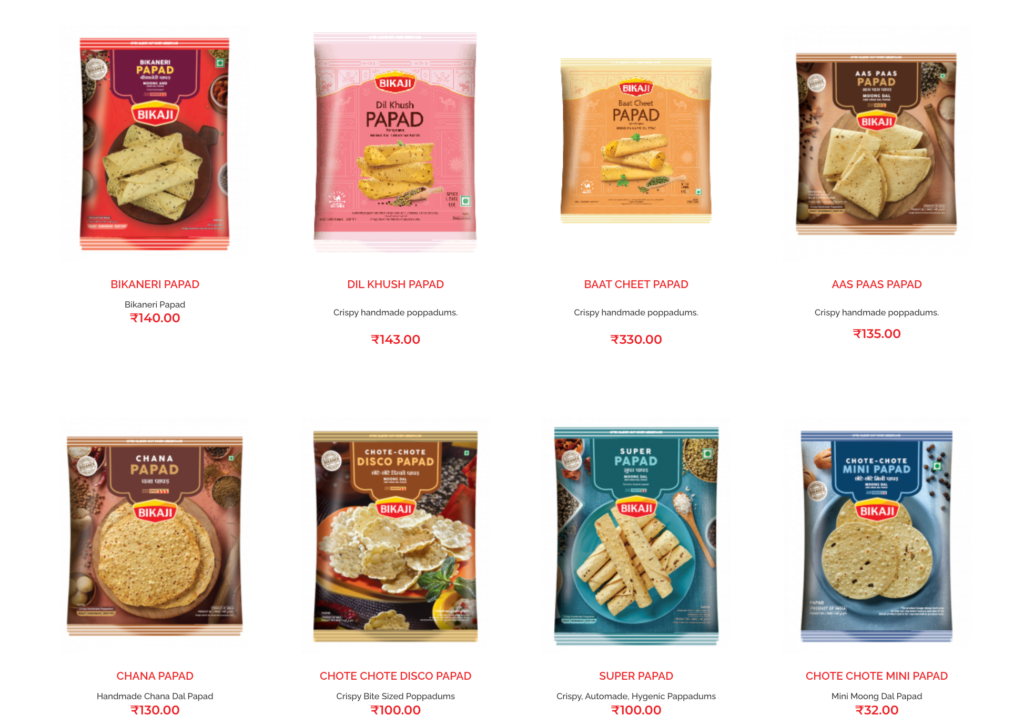
Bikaji Foods International Ltd is the second-largest manufacturer of handmade papads in India, with a strong presence in both handmade and machine-made papad production. By operating both production formats, the company can cater to a wider consumer base while offering products across different price points and market segments.
Its papad portfolio includes several popular variants such as Dil Khush Papad, Baat Cheet Papad, Premium Papad, Aas Paas Papad, Chana Papad, Super Papad and Chote Chote Mini Papad. This diverse product range, with different sizes, flavours and textures, helps Bikaji Foods International Ltd address varied consumer preferences and strengthen its presence across markets. Papad contributes approximately 5% to 7% of Bikaji Foods International Ltd total revenue.
From a profitability perspective, the papad segment is particularly attractive, with margins approximately 150–200 bps higher than the company’s overall average. This is largely driven by stronger demand for larger pack sizes and relatively better production and distribution .

Geography
Bikaji Foods International Ltd operates with a distinct, tiered go-to-market structure designed to consolidate its leadership in legacy strongholds while scaling into high-potential, contiguous states across India and abroad
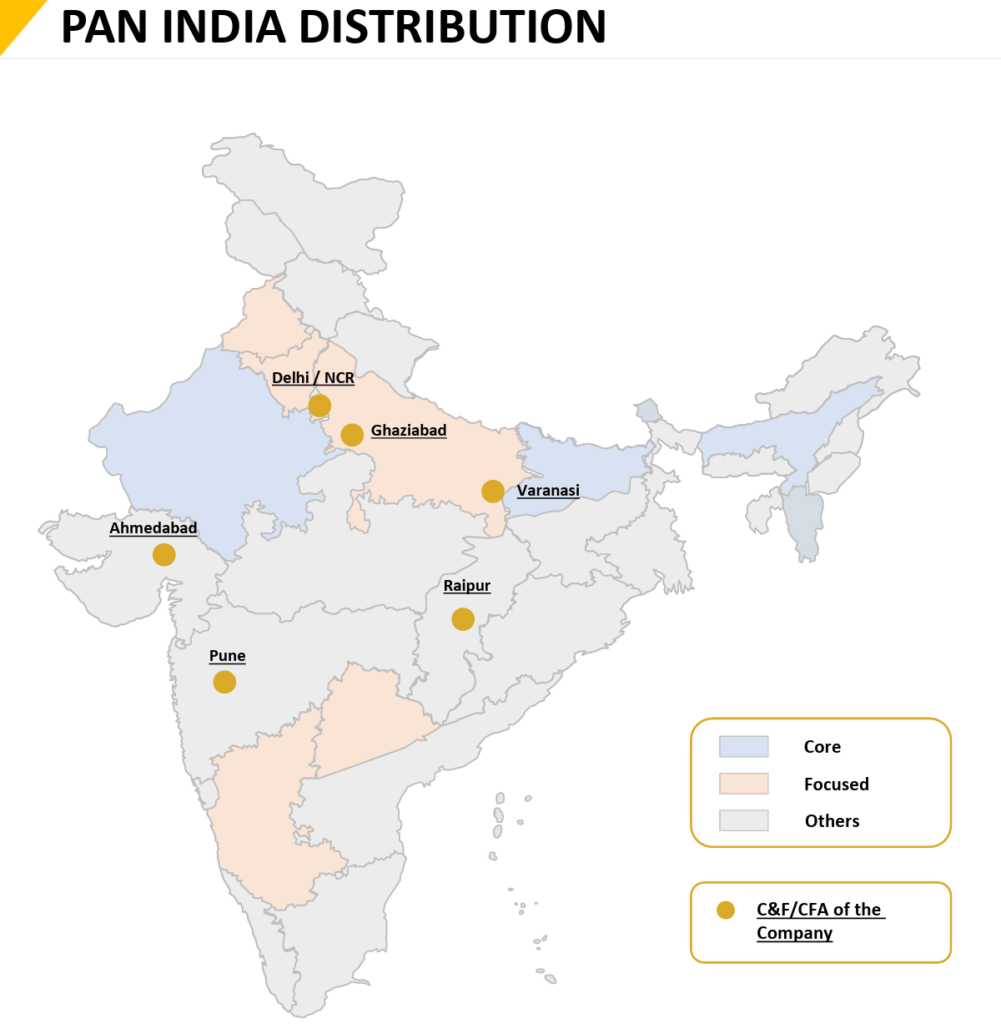
Bikaji Foods International Ltd core states drive 70-75% of historical sales, backed by commanding organised-market shares in Rajasthan (45–48%), Assam (56–58%) and Bihar (25–28%). With national outlet penetration still low relative to the addressable universe, there is substantial headroom, contingent on better distribution economics and execution.
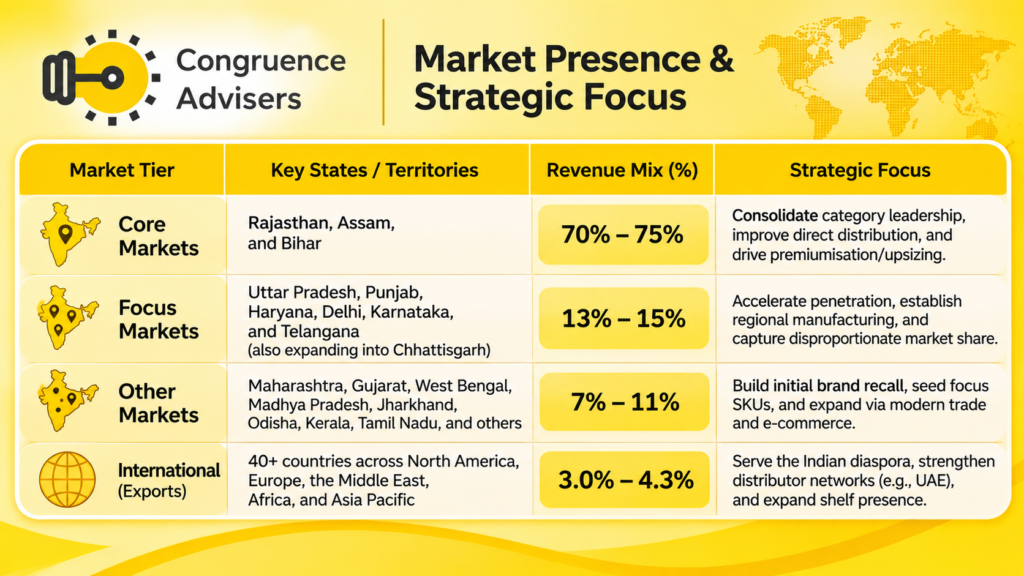
Relative Revenue Share (% Mix)
Manufacturing Capabilities
Bikaji Foods International Ltd operates an extensive, highly automated, and strategically decentralized manufacturing network designed to optimize logistics costs, access local raw materials, and service regional consumer demand across India.

Bikaji Foods International Ltd manufactures across owned plants, subsidiary operations, and Contract Manufacturing Units (CMUs)
- In Bikaner (Rajasthan) – Serves as the primary global hub for authentic Bikaneri Bhujia, ethnic sweets, papad, and frozen products, leveraging direct proximity to local desert ingredients such as cow milk, dew bean (moth dal), and moong dal.
- Guwahati (Assam) – Supplies ethnic namkeen, bhujia, and western snacks across the North-Eastern territory and eastern corridors.
- Tumakuru (Karnataka) – Operated via subsidiary Petunt Food Processors Private Limited (owned 51.22% and later wholly-owned) to manufacture Western snacks and namkeen to service South Indian markets.
- Muzaffarpur (Bihar) – Provides manufacturing depth and local raw material coverage in Bihar
- Mumbai (Maharashtra) – Services local restaurant sales, western regional requirements, and retail lines
Capacity Trends over the years
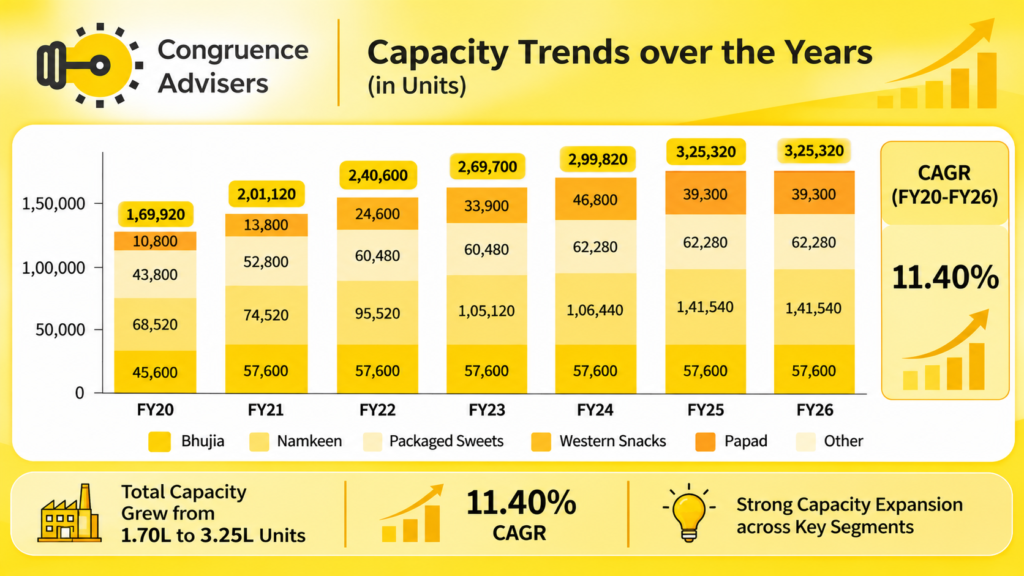
Spare capacity can absorb near-term volume growth without fresh capex

Family Pack vs Impulse Packs
Management has guided that minimal plant capex is required over the medium term and targets scaling blended utilization to 65%–70%+ by FY29, which will unlock substantial operating leverage and expand EBITDA margins
Bikaji Foods International Ltd operates with a distinct packaging architecture categorised into Family Packs and Impulse (Small) Packs. Unlike many general FMCG snack peers whose revenues are heavily skewed toward low-ticket impulse packs, Bikaji Foods International Ltd is distinguished by its market leadership and dominance in the Family Pack segment.
Family Packs: Defined as all SKUs priced above ₹10 (typically spanning ₹20, ₹30, ₹50, 200g, 400g, 500g, and 1 kg bulk packs). These packs are primarily designed for planned in-home pantry consumption.
Impulse Packs: Defined as small, portable packs sold at established mass price points of ₹5 and ₹10. Average grammage typically sits around 16g–18g for a ₹5 pack and double that for ₹10. These cater to on-the-go snacking and consumer trial/recruitment.
Family packs consistently contribute the majority of Bikaji Foods International Ltd product revenues, typically generating 58% to 62% of sales, while impulse packs account for 37% to 41%.
Family packs yield higher realisations and profitability. The gross margin on family packs is approximately 2% to 3% higher than impulse packs, primarily due to lower packaging material costs per kilogram and operational filling efficiencies.
In digital and modern formats (Modern Trade, E-commerce, Blinkit, Zepto, Instamart), which account for ~8% of company business, sales are almost exclusively driven by large family packs and multi-packs rather than ₹5/₹10 SKUs.
While Bikaji Foods International Ltd holds strong market share in large packs across both core and focus states (e.g., holding the second-largest overall market share in Uttar Pradesh primarily through large packs), its presence in small packs has historically been lower. Expanding impulse packs serves as the primary consumer trial vehicle when entering new micro-markets in Focus states.
Over the medium term (2–3 years), management expects the overall revenue contribution to evolve from the current ~60:40 ratio toward 55% Family Packs and 45% Impulse Packs as distribution deepens in focus and non-core markets.
Bikaji Foods International Ltd Corporate Governance
Board composition – As of FY26, Bikaji Foods International Ltd Board of Directors comprised 8 members, of whom 6 were Independent Directors. Mr. Deepak Agarwal serves as Chairman, Managing Director, and Executive Director, and Mrs. Shweta Agarwal serves as Executive Director.
Promoter remuneration – Bikaji Foods International Ltd KMP remuneration at ₹21.38 Cr in FY26, driven primarily by lower short-term benefits and share-based payments. Total KMP remuneration amounted to ~0.8% of Bikaji Foods International Ltd PAT.
Related party transactions – Related party transactions exist but aren’t material or worth flagging
Contingent liabilities – Bikaji Foods International Ltd contingent liabilities stood at ₹8 Cr in FY26 versus ₹8 Cr in FY25, primarily comprising GST claims of ₹5 crore. The total contingent liabilities amount to less than 1% of Bikaji Foods International Ltd consolidated net worth as of March 2026.
Dividend – Bikaji Foods International Ltd has paid dividends consistently over 10 years; in FY26, the company paid Rs 1.25 per share with total outflow around 25 Cr.
A detailed corporate governance check would entail looking at these additional factors, if and when we get to writing a detailed initiation note on this business
- Intangibles involved in the business, do they form a big part of the balance sheet?
- Unit economics – do they fit into the normal range for a business of this nature?
- Is accounting complicated or simple? consistent or changes every few years?
- Consistency in disclosing FX losses/gains and MTM impact?
- Consistency in tax outgo in the cash flow statement and the P&L?
- Is the promoter family actively investing outside of the business- real estate, VC Funds?
- What other organizations are the promoters and directors associated with? Any history of defaults or frauds there?
- Any history of over the top speak by promoters/management in the media?
- Analysis of audit committee notes
- History of change/retention of statutory auditors & auditor remuneration trend
- Insights from credit rating reports
- Pending litigation against company & promoters?
It has been our endeavour over the years to enhance the scope and details of the corporate governance checks we conduct. However, the entire scope of this analysis would be an overkill at this stage of business analysis. This will be appropriate for a deep dive if and when a business is considered for inclusion in the portfolio.
Bikaji Foods International Ltd Financial Performance
Bikaji Foods International Ltd has scaled up significantly over the years, with revenue rising from ₹400 crore in FY14 to ₹2994 crore in FY26, more than a 7x increase. Revenue grew at an 18% CAGR over five years and a 15% CAGR over three years.
Profitability, on the other hand, has improved much faster than revenue. EBITDA rose from just ₹45 crore to ₹462 crore. The improvement has been particularly great over the past three years, with EBITDA growing at a 25% CAGR versus 24% over five years.
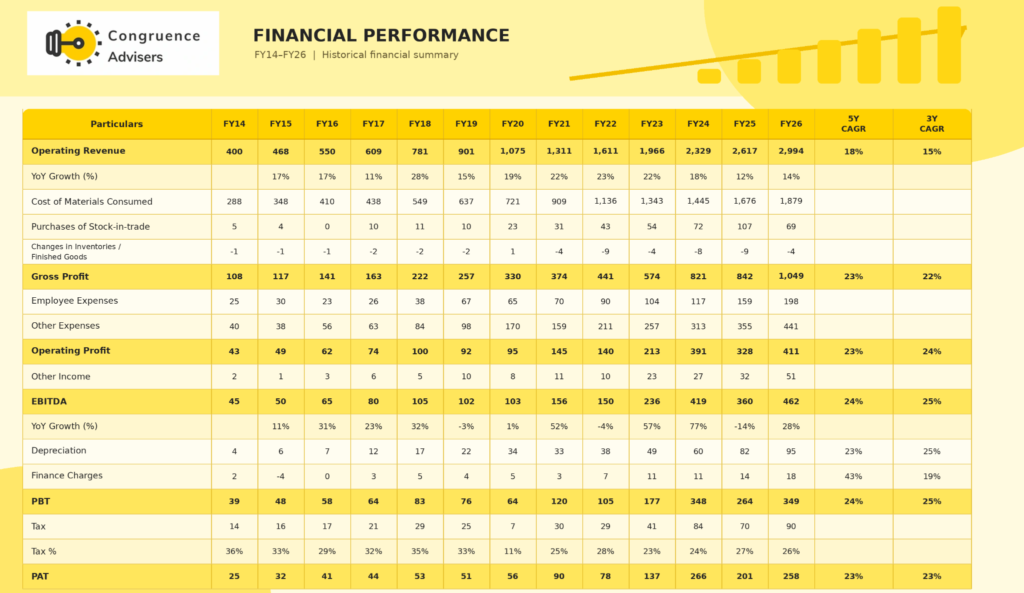
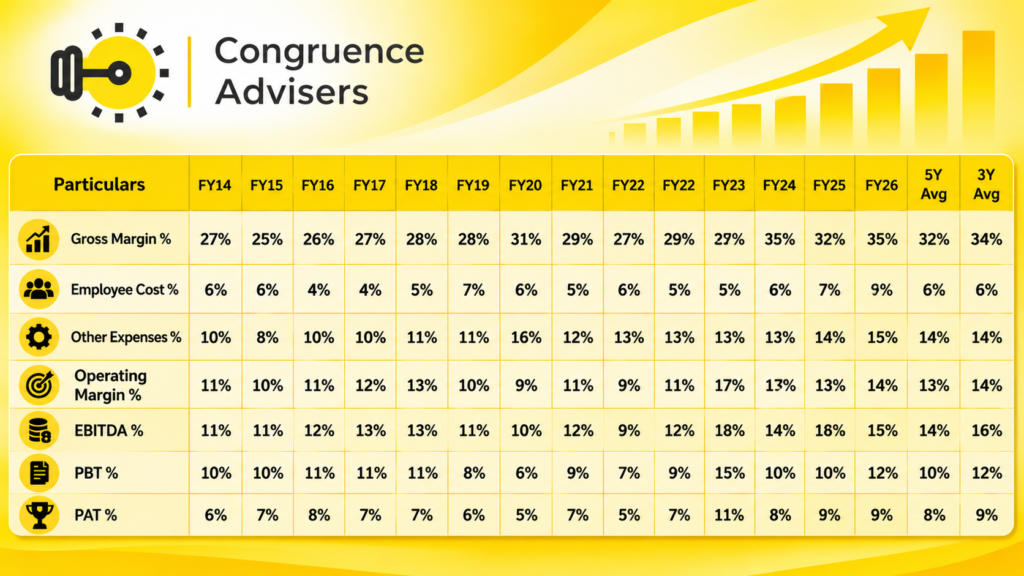
Bikaji Foods International Ltd has kept its gross margin relatively stable despite operating in a competitive, input-cost-sensitive environment. Margins came under pressure during FY21-23 on elevated palm oil prices, improved in FY24 as raw material prices softened, and faced renewed inflation in some key raw materials in FY25. To limit input cost volatility, the company follows seasonal procurement for key raw materials and, in the case of lentils (daal), has entered into supply arrangements with millers to lock in rates.
Bikaji Foods International Ltd has held A&P spending at 2-3% of net sales through periods of disruption, including COVID-19 and inflationary cycles, signalling steady commitment to brand building. The renewal of its Amitabh Bachchan endorsement for the coming years reinforces the focus on brand visibility alongside distribution expansion. A&P spend is likely to stay elevated in the near term as the company supports wider market reach and a broader product portfolio.
Bikaji Foods International Ltd Return Ratios, Working capital, Debt, and cash flow analysis
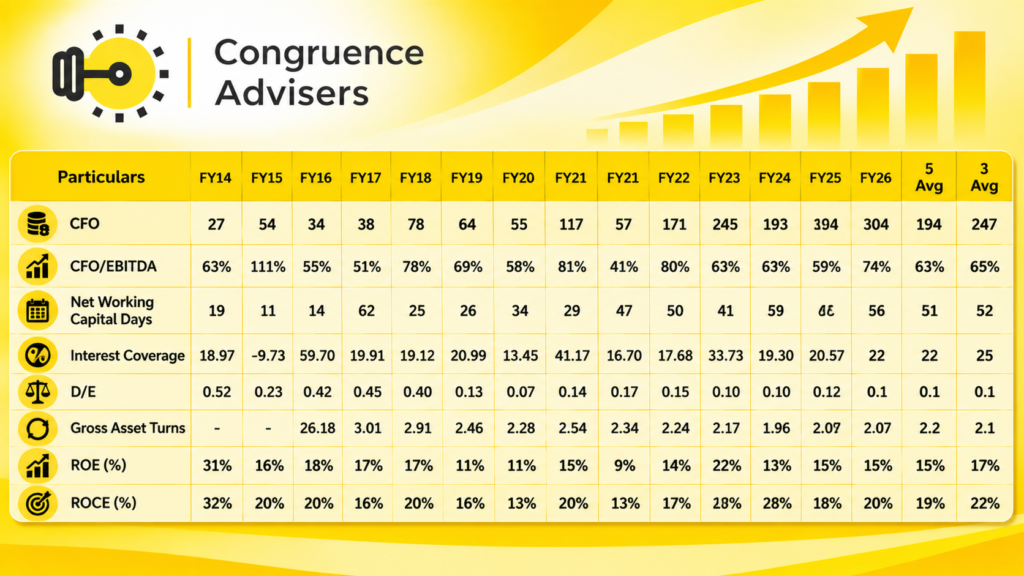
With major capex, including PLI-linked investments, now largely complete, incremental capital spending is expected to moderate over the medium term. As Bikaji Foods International Ltd scales up and profitability improves, CFO should strengthen. Going forward, they expect the CFO to consistently match or exceed ~65%-70% of earnings, reflecting a healthy ability to convert accounting profits into cash.
With major capex now largely complete and most capacities running below ~50% utilisation, we expect capital spending to taper to normal maintenance levels. As volumes scale within the existing capacity base, utilisation should improve without meaningful additional investment, which should in turn lift asset turnover and improve return profile.
Bikaji Foods International Ltd Comparative Analysis
To understand Bikaji Foods International Ltd investment potential, we have conducted a comprehensive analysis. This analysis includes comparing Bikaji Foods International Ltd to its competitors (peer comparison) on various fundamental parameters and Bikaji Foods International Ltd share performance relative to relevant benchmark and sector indices.
Bikaji Foods International Ltd Peer Comparison
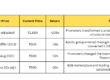
We benchmarked the company against two listed peers, Gopal Snacks and Prataap snacks. Bikaji Foods International Ltd has emerged as the strongest performer among the three companies, supported by superior revenue growth, improving operating margins, stronger profitability, and better cash-flow generation.

Gopal Snacks has a sizable revenue base but has experienced margin and profit volatility. Prataap Snacks has maintained a reasonable revenue scale, but its profitability has been inconsistent.

Why You Should Consider Investing in Bikaji Foods International Ltd ?
Bikaji Foods International Ltd offers compelling reasons to track closely and is worth considering for investors seeking exposure to India’s branded snacking story and the formalisation of the namkeen and sweets market.
Experienced promoters and strong brand equity – The Bikaji Group’s promoters bring almost four decades of experience in making and selling traditional Indian namkeen. This has translated into strong brand recall and customer acceptance in the core markets of Rajasthan, Bihar and Assam. Bhujia and Namkeen contribute 70% of revenue, and the company’s established reputation and broad range in this category give it a competitive edge in these markets. Bikaji Foods International Ltd has been diversifying into sweets, papad, western snacks, frozen food and healthy snacks.
Massive Operating Leverage Headroom – Following capital investments partially supported by the Central Government’s Production-Linked Incentive (PLI) scheme, Bikaji Foods International Ltd consolidated manufacturing capacity stands at 3,25,320 Metric Tonnes (MT). Significant Capacity Slack, With blended plant utilisation at ~48% as of FY26, Bikaji Foods International Ltd requires minimal greenfield capex over the medium term. Management is targeting a ramp-up to 65%–70%+ utilisation by FY29. This expansion is expected to generate significant operating leverage, lower per-unit fixed overheads, and enhance return ratios.
Supply Chain Decentralisation & Freight Efficiency – Bikaji Foods International Ltd has systematically transitioned from a single-city production model in Bikaner to regional owned plants and dedicated Contract Manufacturing Units (CMUs) across Guwahati, Kanpur, Patna, Muzaffarpur, Raipur, Kolkata, and Tumkur. Manufacturing voluminous, low-density snacks (such as extruded snacks and namkeen) close to regional consumption centers reduces freight and transit costs.
Premium Product Mix & Margin-Accretive Pack – Unlike competitors who rely on lower-margin impulse packs, ~58% to 62% of Bikaji Foods International Ltd revenue is derived from Family Packs (SKUs priced >₹10). Family packs generate approximately 2% to 3% higher gross margins due to packaging efficiencies and habit-forming in-home consumption.
Strategic Geographic Playbook: Expanding from Core to Focus Markets – Bikaji Foods International Ltd commands dominant market share across its core trio, Assam (~58%), Rajasthan (~45%), and Bihar (~29%), which generate ~70% of revenue and predictable free cash flow. The company is expanding into contiguous focus states (Uttar Pradesh, Punjab, Haryana, Delhi, Karnataka, and Telangana). Uttar Pradesh alone offers a Total Addressable Market equal to the other five focus states combined, delivering growth upwards of 20% YoY. Exports to 40+ countries grew 52.3% YoY in FY26, boosted by dedicated entities like Bikaji USA and strategic joint ventures such as the 50:50 partnership with Chaudhary Group (CG / Wai Wai) in Nepal.
What are the Risks of Investing in Bikaji Foods International Ltd
Investors need to keep the following risks in mind if they choose to invest into this business. Risks needs to be weighed in combination with the advantages listed above to arrive at a decision that is optimal for your portfolio construct
Intense competition in a fragmented industry: Bikaji Foods International Ltd operates in a fragmented food market, competing with numerous local, unorganised manufacturers as well as established organised players such as Haldiram, PepsiCo India, ITC, Balaji Wafers and Prataap Snacks. This competitive intensity requires sustained, high selling expenses to defend its market presence. Further, the company’s push beyond its core market of Rajasthan exposes it to market risk, since tastes and consumer preferences vary across geographies. Its ability to manage these risks through a more diverse product portfolio will remain a key monitorable.
Raw material exposure: Pulses, gram flour, edible oil and packaging account for roughly 60% of Bikaji’s cost of goods sold, leaving the company sensitive to commodity price swings. Seasonal sourcing and price-locking arrangements provide partial protection, but prolonged inflation or supply disruptions could still squeeze gross margins. Pricing power is limited in low unit packs and price-sensitive markets, particularly when consumer demand is weak, which constrains the company’s ability to pass on higher costs.
Food Safety, Regulatory Compliance & Brand Equity – Adherence to regulations prescribed by the FSSAI and international food regulators is critical. Any quality control lapse, allergen cross-contamination, non-compliance with ingredient standards, or changes in mandatory nutritional labelling rules could result in regulatory penalties, product recalls, or damage to consumer trust.
Seasonality & Operational Slack in Packaged Sweets – Demand for packaged sweets and festival gift assortments is heavily concentrated around Rakshabandhan, Diwali, and the winter wedding season. Facilities experience peak capacity constraints during festive quarters followed by operational slack during off-peak quarters, creating quarter-on-quarter revenue and margin volatility.
Bikaji Foods International Ltd Future Outlook
Bikaji Foods International Ltd strategic roadmap and outlook beyond FY27 centres on unlocking operating leverage, scaling distribution across focus states, expanding its “House of Brands” retail and bakery verticals, and transitioning to a steady-state EBITDA margin of ~15% to offset the expiration of the government’s PLI scheme.
Targeting 65%–70%+ Plant Utilisation: Having expanded its consolidated manufacturing capacity to 3,25,320 Metric Tonnes (MT) across 10+ regional facilities, Bikaji Foods International Ltd is currently operating at ~48% to 52% utilisation. The company has set an explicit target to scale capacity utilisation to 65%–70% (and up to 75%) by FY 2028–29 (FY29).
Management projects that absorbing this capacity will lower per-tonne fixed overheads, enhance fixed asset turnover, and generate 50 to 75 basis points of operational efficiency savings. Operating margins will be further supported by integrating solar installations across primary plants to shift power consumption toward green energy and reduce utility expenses.
Bikaji Foods International Ltd central government Production-Linked Incentive (PLI) scheme benefits (totalling ~₹261 cCr across incentives) run through FY27 and historically contributed approximately 100 to 150 basis points to consolidated EBITDA margins. Management has guided that as PLI incentives conclude after FY27, the resulting margin gap will be fully absorbed by operating leverage, procurement scale, and premiumisation. The company targets an underlying EBITDA margin of ~15% over a 3- to 5-year horizon, expanding by roughly 50 basis points YoY.
Following capital investments of over ₹500 Cr (including Contract Manufacturing Units) committed up to FY25/FY26, Bikaji Foods International Ltd does not require major greenfield plant investments over the medium term. Future annual capex is expected to normalize at approximately ₹40 to ₹50 crore, earmarked primarily for routine maintenance, supply chain automation (such as the new Automated Storage and Retrieval System [ASRS] facility in Bikaner), and minor equipment for new product developments (NPDs).
Management targets sustaining 12% to 15% underlying volume growth over multi-year cycles.
Targeted to outpace core markets, growing at 1.4x to 1.5x the core growth rate (15% to 20%+ YoY). Uttar Pradesh remains the primary volume driver among focus states.
Having expanded direct retail coverage to over 3.54 lakh outlets (and total reach to nearly 14 lakh outlets by FY26), Bikaji Foods International Ltd plans to add ~50,000 direct retail outlets each year.
Direct retail reach is targeted to expand to 4.5 lakh to 5.0 lakh outlets over the next three years, prioritising urban and rural counters with populations over 10,000 in focus states.
Having acquired a majority stake in THF, Bikaji Foods International Ltd is expanding this café-cum-artisanal sweets vertical. The company plans to add 8 to 10 stores annually, scaling the brand’s top line from over ₹100 Cr toward a longer-term retail footprint while remaining EBITDA-positive.
Operating through its joint venture with industry veteran Thayekunni Khaleel (founder of Bakemart), Bikaji Foods International Ltd Bakes focuses on European artisanal breads, croissants, and viennoiserie. Management projects the business will scale into a ₹100 Cr revenue vertical over three years, serving export markets, modern trade, quick-commerce, and B2B channels.
Bikaji Foods International Ltd Technical Analysis
We consider technical analysis to be a useful input in taking medium-term investment decisions. Many a time, price action tends to lead to fundamental developments; this is too important an aspect to be ignored by retail investors who do not have access to management outside of common forums like investor calls & AGMs.
At Congruence Advisers, we like to consider both the long-term weekly chart and the daily chart to arrive at a view on price action. Combined with our understanding of fundamentals, we usually end up being better placed to be able to judge both the business cycle and the stock cycle. Playing the stock cycle right is extremely important for investors looking to extract significant alpha over the medium term.
Bikaji Foods International Ltd Price chart
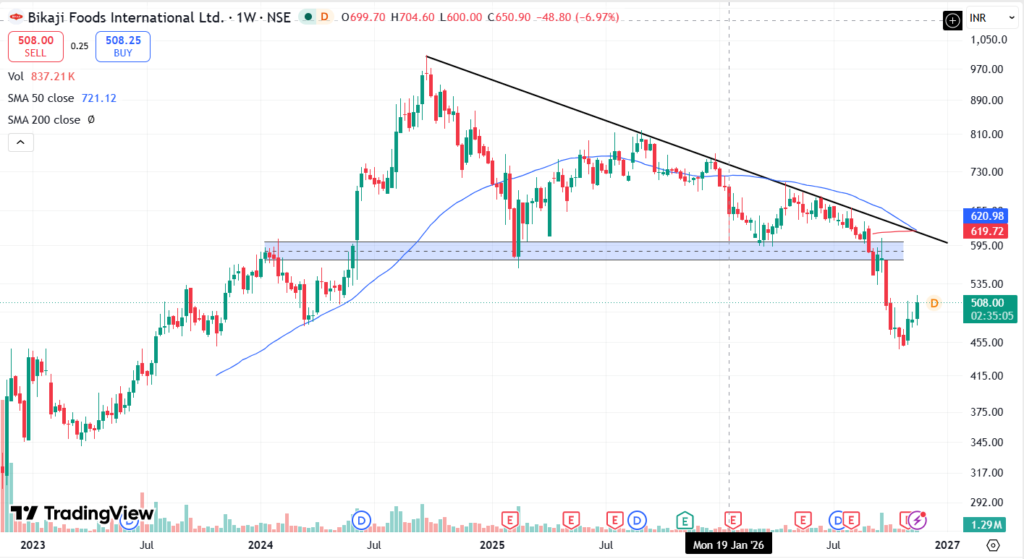
The weekly chart indicates that the stock has been in a prolonged downtrend from the high of September 2024 with repeated selloffs every time the price approaches the diagonal resistance trend line. The price also broke below the April 2025 tariff tantrum low of 575-600 in the recent bout of market volatility since September 2026. The price trend however has shown the first signs of bottom formation following the Q2 FY27 results declared in the first week of November. Three consecutive green weekly candles since then indicate the possibility of an upcoming turn in the trend, if the fundamental numbers start supporting from Q3 FY27 onwards.
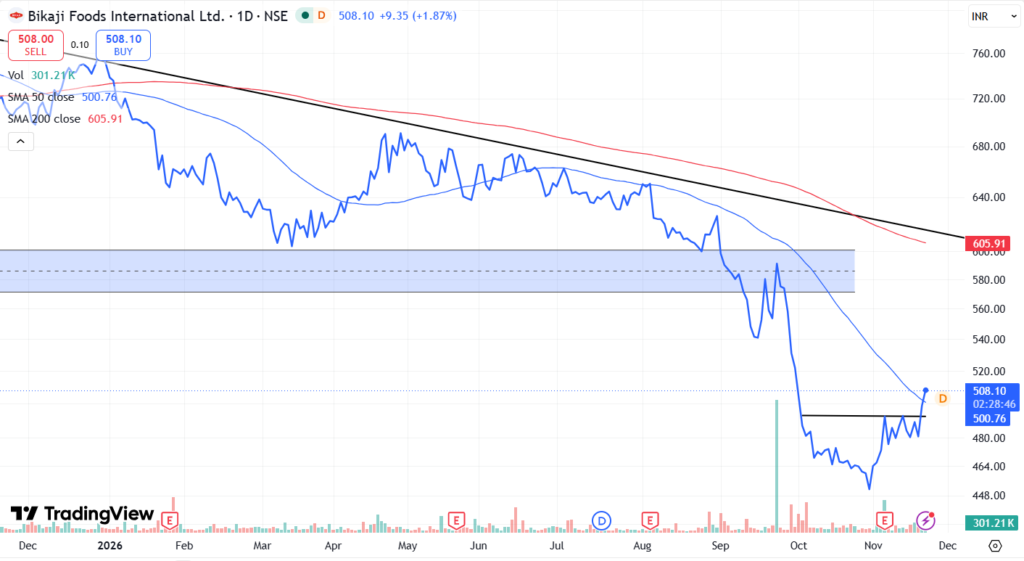
The day chart (line chart for better clarity) shows the first positive pattern in a long time. A spike off the lows from a price level of 450, followed by a short base formation for a few days before a mini breakout to the current level beyond 500. The first sign to note would be the CMP sustaining above the 50DMA from here, to be followed by the 50DMA eventually turning upwards as the average starts to pivot. Interestingly the 200DMA and the diagonal resistance line are both clustered around a price level of 600-610 indicating that could be the decisive price level to confirm a trend reversal.
In such case where the price trend indicates potential, investors will need to the fundamental work to assess the earnings expansion potential over the next few quarters before taking an allocation decision.
Bikaji Foods International Ltd Latest Results, News and Updates
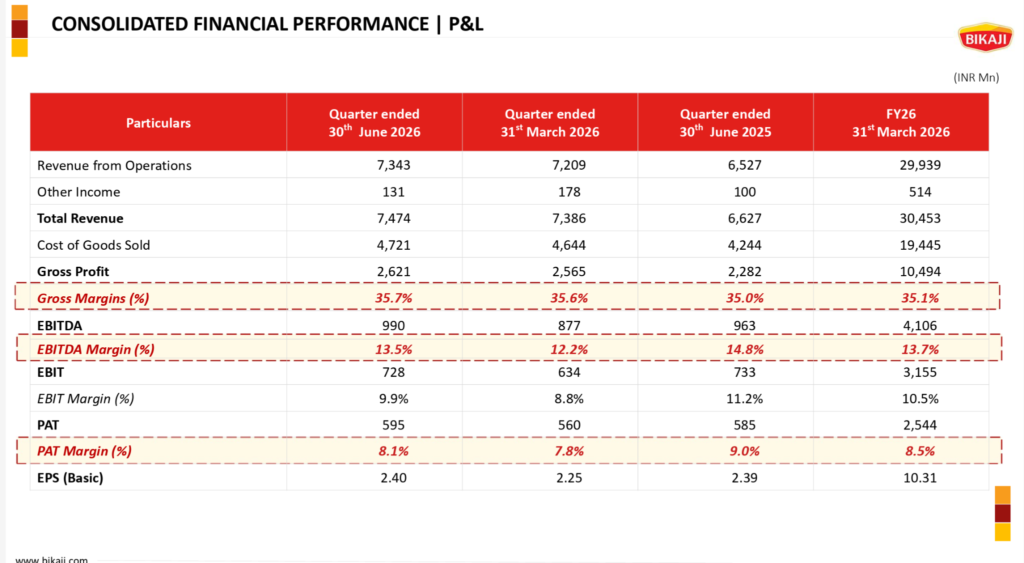
Bikaji Foods International Ltd Overall volumes grew 7.7% YoY in 1Q27. Value growth was led by 11.4% YoY growth in Ethnic snacks, 21.3% YoY in Western snacks, and 4.4% YoY in Packaged sweets.
Core markets grew by 10.8% YoY; focus markets were up 19% YoY, and other markets grew 5.6% YoY in 1Q27. Exports declined by 2.2% YoY.
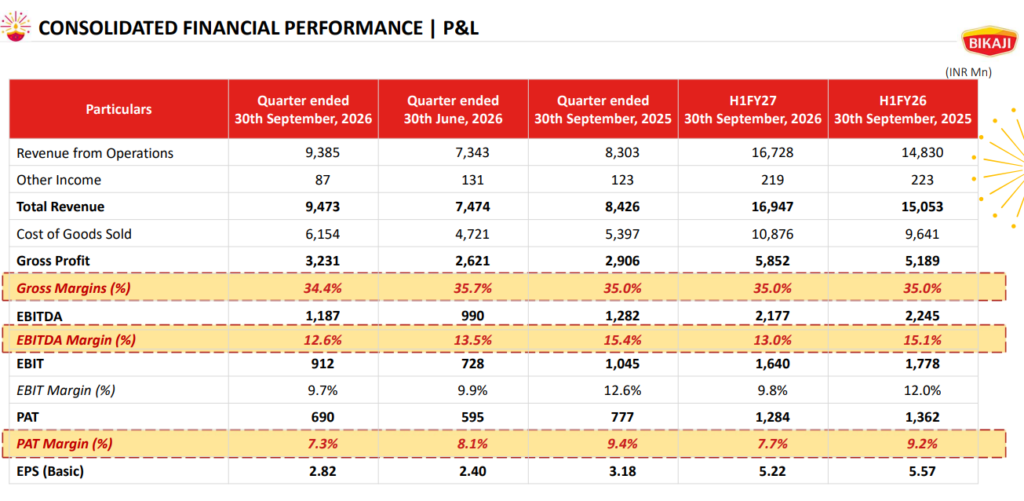
Q2 FY27 saw another healthy quarter where volume growth of 5% YoY culminated in a revenue growth of 13% YoY at improved operating margin of 13% for the second quarter in a row. The business was able to keep gross margin compression to 100 bps YoY in the face of high input cost inflation through H1. With price hikes expected to take place post Diwali, the management team expects to see a mean reversion of gross margin by Q4 as the full quarter will see higher pricing. Higher other expenses were the dampener in Q2 FY27 in an otherwise steady quarter.
Final Thoughts on Bikaji Foods International Ltd
Bikaji Foods presents yet another opportunity to participate in the non metro consumer discretionary segment in India. While the category is very competitive with multiple players, it is also habit forming introducing the prospect of inertial loyalty in favour of branded players. The business is just coming off a large capex with no incremental investment planned over the next 3-4 years. At an overall utilization of less than 50%, operating leverage is high in the business on the manufacturing side of things.
FY27 is expected to be a challenging year for staples due to high input cost inflation that is being passed onto the consumers in a graded manner across categories like cigarettes, FMCG categories and food. We have observed that large players focus on market share gains during periods of high inflation, as local players have challenges in production and maintaining margins. We expect to see the margin profile of Bikaji Foods normalize by Q1 FY28 assuming there is no further disruption from the West Asia situation on commodity prices. While the PLI benefits will cease from FY28 onwards, the management team is confident of higher utilization delivering enough value to offset the shortfall from the PLI incentives.
The ideal situation for a consumer business is healthy volume growth (ideally in double digits) coupled with an uptick in realization and market share gains over the years. Will Bikaji Foods be able to deliver this over the next 5 years? This is the question that the market is looking for answers to. The valuation of the business is down from the highs of 2024, though not cheap in an absolute sense for a consumer business at 3.5-4x price to sales.
We will continue to look for signs of volume growth coming closer to double digits in H2 FY27. This coupled with the presence of operating leverage can get the business on a respectable earnings expansion track over the next 2-3 years.
Disclaimer – This note is part of a business research & analysis series on small companies, there is no BUY/SELL recommendation or target price issued as part of this to a general audience. There is no assurance that this stock makes for a good investment, there is no guarantee that this stock will continue/be included in the coverage universe of Congruence Advisers. The note contains some forward-looking statements and insights drawn from the historical results, annual reports and investor presentations; they are to be viewed only within this context and not as a prediction of future performance of the business or the stock covered.
While due care has been taken to ensure that the information here is as accurate as possible, Congruence Advisers disclaims any liability in case of any unintentional inaccuracies.
The content does not constitute investment advice.